
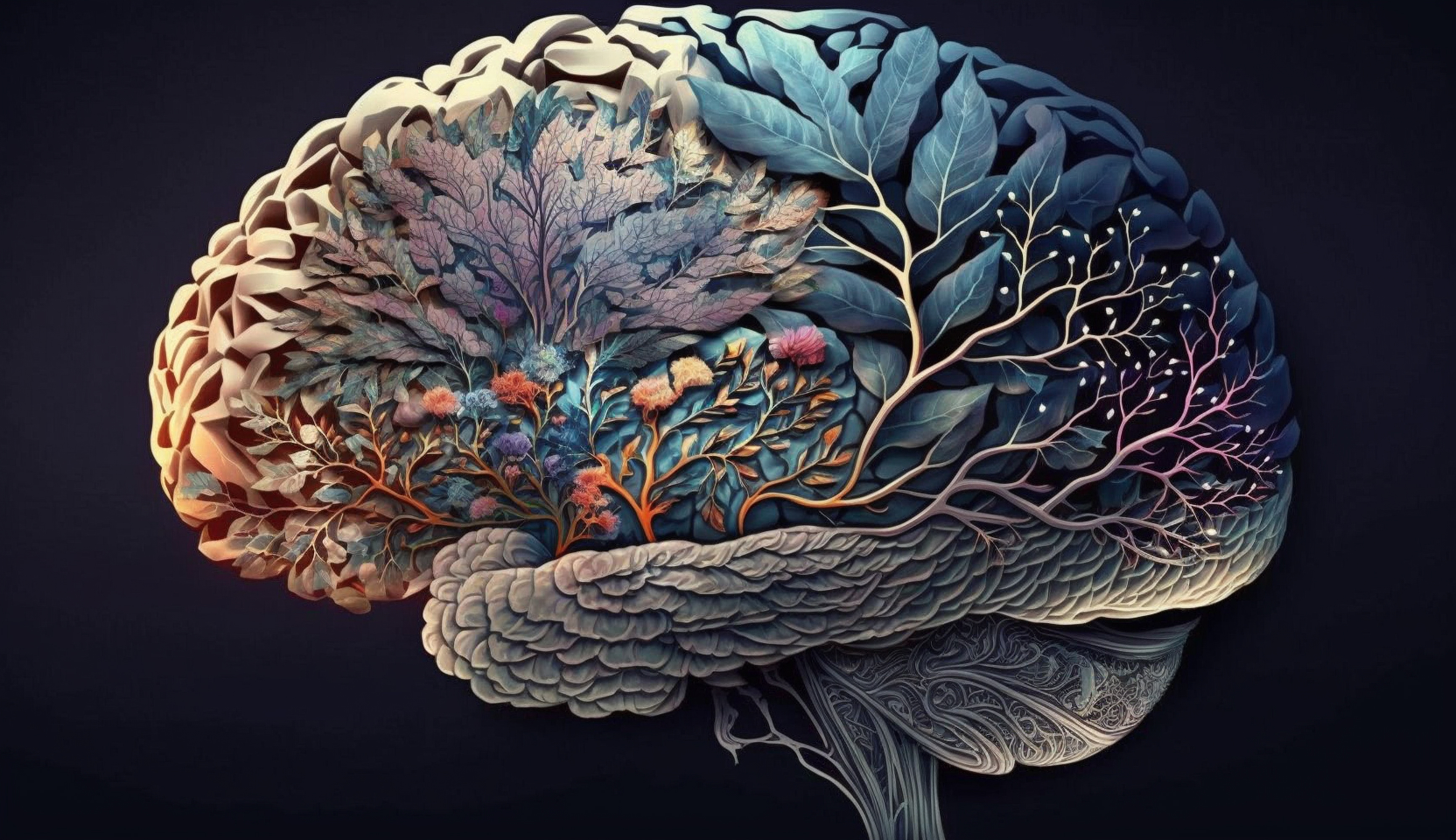
Mental ruts can refer to a “state of feeling stuck, unmotivated, or emotionally stagnant,” or it can mean repetitively thinking and doing things in a fixed way that is difficult to change (see Google AI definition). In my last post, Pitfalls of Rumination, I begin to address how we can get to this point in the second part of the definition by giving in to rumination. This is a deeper dive into the ruts that form in our brain when we form the habit of ruminating.
Recall I am not a therapist or a trained professional in this area; I simply write from my observations and things I’ve learned.

Ruts can be helpful in some instances. My husband tells a story about going too far out on the beach in South Texas in a 2-wheel drive truck. This was back when he was a barely 20-something indestructible whipper-snapper who was NOT going to be left behind.
They were headed to an area known as Big Shell on South Padre Island. There is loose sand and mostly shell on the beach, and very few vehicles venture that far south, so nothing is compact at all. It’s very easy for a vehicle to just sink, especially when the tide comes in. So most people (read: indestructible whipper-snappers) who are brave enough to go out there have a 4-wheel drive so they can hope to get out.
Once he got in there, he of course got stuck. Some random guy pulled him out, but driving on extremely loose sand/shell is (I would imagine) similar to driving on loose snow: if you’re moving, don’t stop moving. So once this guy pulled him out, he had to keep moving. The problem was he couldn’t turn around without risking getting stuck again. You see, it was the ruts that were compact enough to keep him in place. He would sink if he got out of the ruts.
So what did he do? He backed out. For miles and miles, in reverse, that boy backed out of Big Shell in his truck. And he had to take the ruts back out to be successful. Which he obviously was. 😏
Point is, sometimes the ruts are beneficial in getting us to a solution fast. We’ve been there/done that, so we respond more quickly, more purposefully, because our brains know just what to do. Just like the ruts he’d just driven in, he could use them to get himself out.
Our brains are designed to do the same thing, and in many circumstances, it can be helpful because it doesn’t have to learn something new, which takes longer than traveling a well-worn path.
Other times, however, they can be detrimental. How do we know the difference? Because in the first case, the rut helps us know what to do in a given situation. One and done. But in the rest of this post, I’m talking about the second case: when the rut keeps us in a continuous pattern of destructive thinking.
On this second example, Samuel Cadman, a clergyman from Brooklyn, once said, “The only difference between a rut and a grave is a matter of depth.”
Illuminating.
A mental rut is one in which we continually chew on the same cud over and over and over…ad nauseam. It happens when we unknowingly slip into the pattern described in my last post: ruminating. But it goes a step further by actually creating a habit that is ultimately difficult to break.
When someone is in a rut, their brain’s well-worn neural pathways, or habitual electrical patterns, can cause them to get stuck. The brain’s dorsolateral prefrontal cortex (DLPFC), also known as the “pattern seeker”, applies rules based on past experiences to new situations to avoid having to learn something new. This can lead to self-reinforcing ruts that can be difficult to break out of.
-Srini Pillay, MD, Harvard Health
Rumination can be for a short time, but when it’s done repeatedly over time, it can create these ruts in our mind.
In layman’s terms, here’s how it happens: we begin by overthinking something, and it becomes habitual because we are never working toward a solution. The more often we go over it, the stronger the neural pathways become in that train of thought.
When we learn something new, our brain will create a new neural pathway. This happens because neurons send electrical impulses from one neuron to the other to the next, etc., jumping across the synapses in between (which is where the firing happens). When we continuously think about or do that thing repeatedly, that pathway becomes stronger and more permanent.
The process is called neuroplasticity and it is how habits are formed. It’s also how addictions are formed.
Our brains work on a reward system, so whether we are rewarded with endorphins for a clean workout or a solid belly-laugh, oxytocin from a meaningful conversation or deep bonding with someone, or if it’s a hit of dopamine (the “happy hormone”) from something pleasurable we’ve just engaged in, we will desire to continue to do those things because the neural pathways lead to a great reward. And each time we engage, those pathways get stronger and more habitual.
As you can see, this is a beautiful design of our bodies with the intention of causing the desire of good things that were meant to be enjoyed.
Of course, the sinful nature comes into play, and we have a tendency to thwart the original plan. Because we do have a sinful nature and because bad things do happen in this world around us, sometimes our desires turn sour and these pathways are used instead in destructive ways. This leads to harmful addictions, which is a whole other thing.
The point I’m making is that our thinking habits are crucial to freedom and joy. The second point I’ll make is that our thinking patterns (like any habits) can be changed when we decide to do something.
Before I go any further, I want to look at what Scripture says about this, because it lays an important foundation in understanding this critical issue.
“Do not be conformed to the patterns of this world, but be transformed by the renewing of your mind.”
Romans 12:2
Paul is exhorting believers to not conform to the “patterns of this world.” Let’s look at that first. Patterns can be behavioral patterns, which are always the ultimate outworking of thinking patterns, so I would say this scripture applies to our context.
“…of this world” simply refers to the system of the world in which we live, which is (and always has been since the Fall of Mankind) contrary to God’s will and nature. So we are to avoid conforming to (being similar to or obedient to) the patterns of thinking and behavior that the rest of the world apart from God relies on. Fair enough.
Now let’s look at the second half of the verse, the solution: be transformed by the renewing of your mind.
The word transformed in the Greek is “metamorphoo” which is where we get the word for metamorphosis (think a caterpillar into a butterfly). This isn’t just a simple little change of habit, mind you. This is a completely different form of being altogether! This is the same word that was used to describe Jesus in His transfiguration before his death and resurrection in Matthew 17. The disciples saw a marked difference in His appearance and being that radiated from the inside. This is the kind of transformation that happens at the point of salvation for us.
But the renewing is the part that happens during sanctification – growing, developing, and maturing as a believer. If you’ve stopped doing this, it’s time to get back to renewing your mind. Look at the tense of that verb “renewing” – it is present and on-going. It’s not one and done.
The Amplified Bible says of this passage: “and be continually renewed in the spirit of your mind [having a fresh, untarnished mental and spiritual attitude].”
Another scripture that comes to my mind is this:
“We demolish arguments and every high-minded thing that is raised up against the knowledge of God, taking every thought captive to obey Christ.”
2 Corinthians 10:4-5
This one is rather self-explanatory, but I would point out that the Greek word for “captive” has in it the connotation of a prisoner of war. If a thought is not aligned with God’s nature, then it is the enemy. Chew on that for a minute.
There are others (Colossians 2:8 is one I like to unpack in philosophical discussions), but I think there’s a clear understanding that much of a spiritual (and obviously mental) battle is fought in the mind.
With Scripture as the underpinning, let’s pivot to a pragmatic approach.
As I mentioned earlier, it is absolutely possible to rewire our brain. Like anything worthwhile, it takes intentionality, effort, and consistency. It also takes a little time.
Ways to Take the Exit Ramp
From my observation, it requires at least 3 things specific to our task:
- Mindfulness
- Routine
- Self-reflection
Mindfulness
By mindfulness, I mean constant awareness of the need to redirect our thought life. This is the gut-check I mentioned in my last post…always check yourself and where you are mentally. Ask yourself questions, especially in the area of self-talk.
- Self talk about yourself
- Self talk about other people
- Self talk about your situation
Is it really as bad as your rut demands? Or is that just where your mind goes each time? To where does the rut lead? Always to the same place. Is that where your current thinking pattern is leading you?
How does the rut affect our perspective/ interpretation of the thing? Does it allow for flexible thought of another perspective or interpretation? No. Almost never. If this is true of your thought pattern, it’s time to do something.
This is what is meant by being introspective, and it’s healthy when it’s done with the purpose of helping you understand yourself and promoting personal growth.
Routine
If you discover you’re in a place where you need to do something, that means changing direction – getting out of the rut. There are several ways to do this depending on the type of thought you’re rewiring or the immediate need in that moment.
This is what I meant in my last post about changing your input. If you need something to distract you to immediately get you out of that pattern, then usually reading, listening to, or watching something uplifting will usually do the trick. This doesn’t necessarily rewire deeply, but it keeps you from going all the way down that path and strengthening it once again.
A deeper way to change the pathway is to take some time to dig a deeper way out.
The way I do this is to pray or journal (what I’m doing right now). When I notice I’m thinking about a situation that will cause rumination, I find something about it that I can go to the Lord about. It may be a quick prayer, or it may be a “sit for a few minutes and hang there” prayer…whatever time allows. I follow that with a series of deep breaths, which resets my nervous system.
Side bar breathing technique: count as you breath in. If you take 5 seconds to breath in, take 7 seconds to breath out. Do this at least 3 times and you won’t believe how much better you feel.
The idea is to change the routine that follows that thought pattern. Over time, this is what literally changes the neural pathways in our brains! How cool is that?
Self-Reflection
The last thing that helps in building consistency is self-reflection. Take some time to think about the result of what you just did later in the day. Did you continue down that path after all? Or did you break free of it? If you did break free of it, do you think it impacted the rest of the day in a more positive way than if you had traveled that old road? Most of the time, your answer will be obvious. If you really want to get serious, this is the point at which you could journal.
When you cognitively acknowledge the effort and reward, you are reinforcing the neural pathways and building consistency – practicing, training – until it becomes “second nature.”
That’s the part where time kicks in.
The cool thing about this is your brain will eventually “cut off” old unused pathways in favor of building new ones. Your brain will actually prune itself to allow more growth!
Like any cultivation, the labor is always fiercely outweighed by the result.
“Let us not grow weary in well-doing, for in due time we will reap a harvest if we do not give up.”
Galatians 6:9





Leave a Reply